Concrete removal, hauled off and the ground left ready
Sometimes the right answer is to take the old slab out and start over, and sometimes it's to take it out and plant grass. Either way the lawn survives, the concrete goes to a recycler, and the ground is graded before we leave.
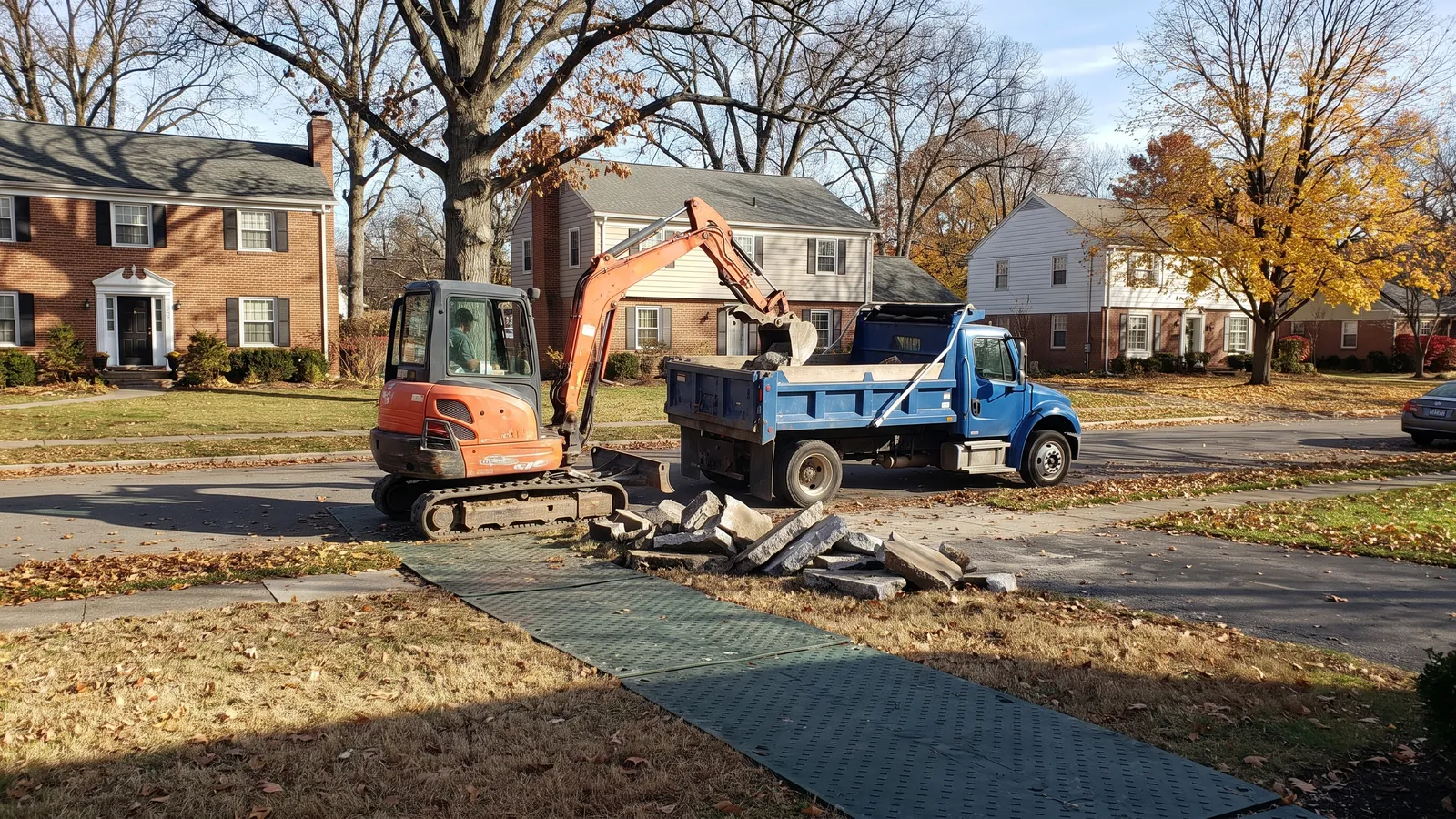
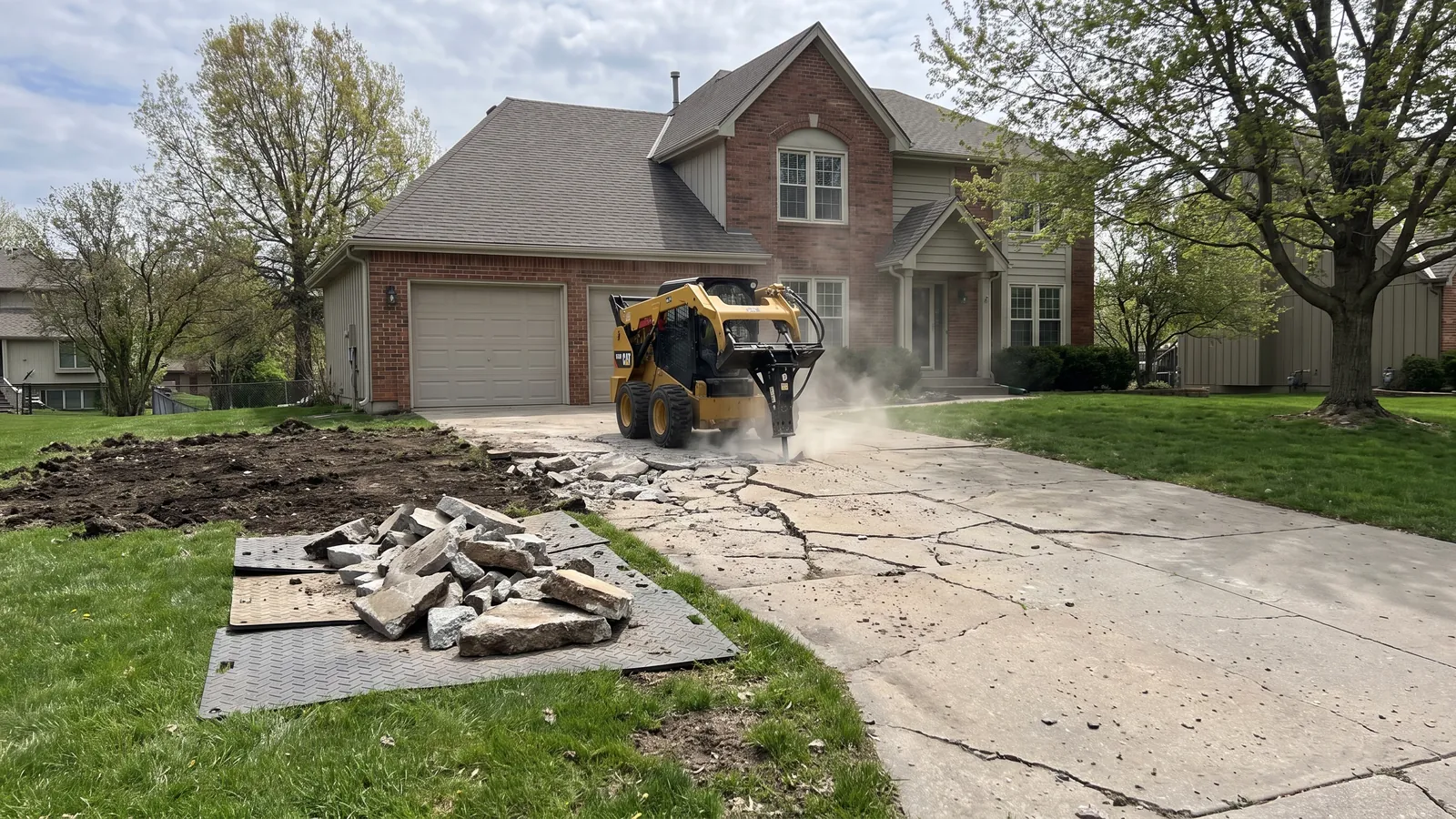
Removal is the first day of most replacements and a job of its own for a patio nobody uses, a cracked basketball pad, an old shed slab, or a walk that's been a trip hazard for years. We break the slab with a hydraulic breaker on a skid steer or a mini excavator, saw-cut clean edges where it meets concrete that's staying, load the pieces into a dump truck, and haul them to a recycler that crushes them into base. On a typical driveway that's one day. The lawn gets protection mats where the machines drive, and we regrade what we cross.
What's under the slab matters as much as the slab. Old driveways here often sit on nothing but clay, with voids where water washed the base out at the garage and the approach. If new concrete is going back, we dig out the soft spots and bring in base. If grass or landscaping is going in, we loosen the compacted clay, add topsoil, and grade so the spot drains rather than collecting water against the house. Rebar and wire mesh come out with the concrete; so do the old sprinkler heads we find, which we cap or move.
The approach at the street is City right-of-way, and removing it is right-of-way work: the City's permit, the 48-hour notice, backfill within five working days and restoration within three weeks. If you're removing an approach for good, it gets closed with curb, gutter and sidewalk to the City's detail; see approaches and sidewalks. We check for buried utilities before we dig, and Kansas 811 marks the public lines first.
What's included
Broken out and hauled
Hydraulic breaker, skid steer or mini excavator, dump truck, and a recycler for the concrete wherever one accepts it.
Clean edges
Saw-cut where the removal meets concrete that stays, so the new pour or the lawn has a straight line.
Lawn protected
Ground mats where equipment drives, and the ruts regraded before we leave.
Ground left ready
Soft spots dug out and base brought in for new concrete, or topsoil and grading for grass.
Utilities located
Kansas 811 called before we dig, and private lines and sprinklers found and capped or moved.
Right-of-way handled
City permit, notice and restoration when the approach or the public sidewalk is part of the removal.
Concrete removal costs in Olathe, KS
| Job | Typical price | Notes |
|---|---|---|
| Driveway removal and haul | $1.50 – $2.50 per sq ft | Two-car driveway ≈ $1,500–$2,400 |
| Patio, walk or pad removal | $2 – $4 per sq ft | Small jobs carry a minimum |
| Thick slab, footings or steps | $4 – $8 per sq ft | Reinforced or over 6 inches |
| Minimum charge | $450 – $750 | Machine, truck and dump fees |
| Base prep for new concrete | $1 – $2 per sq ft | Compacted base over the clay |
| Topsoil and grading for lawn | $1.50 – $3 per sq ft | Ready to seed or sod |
These are 2026 Johnson County ranges to help you budget. Your written price is itemized (removal, base, mix, thickness, reinforcement, finish, joints, sealer and any permit) and good for 30 days.
Recent work
Questions we get about concrete removal
Can you remove just part of a slab?
Yes. We saw-cut a straight line where the removal ends and break out only what's going.
Where does the old concrete go?
To a recycler that crushes it into base wherever possible. It's usually cheaper than a landfill.
Will the equipment wreck my lawn?
We use tracked machines and lay mats across the lawn where we drive. There's usually some light rutting, and we regrade what we cross.
How long does it take?
Most driveway and patio removals take a day. A new pour can often follow within a few days once the base is ready.
Do I need a permit to remove a driveway?
Not for the part on your lot. The approach at the street is City right-of-way and needs the City's permit, and if it's being closed permanently the curb and sidewalk have to be restored to the City's detail.